
Some of the most interesting things online come from ordinary people paying attention. Someone shares what happened when they moved to a smaller town. Another person explains how they finally kept a balcony garden alive. You arrive looking for one answer and stay because you like the person behind it.
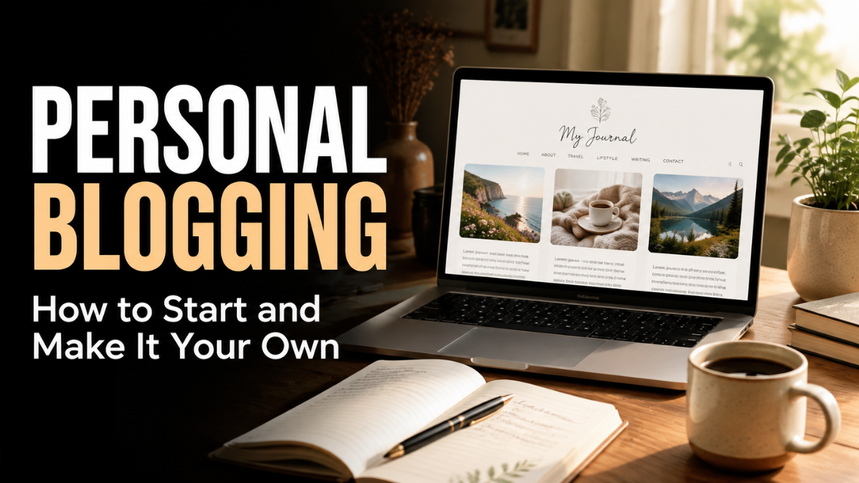
That’s the appeal of personal blogging. It’s a space to share your experiences, interests, and opinions in a way that connects with other people. You don’t need an extraordinary life or a polished public image. You need something you care about and a reason to invite readers into the conversation.
Table of Contents
- Give Your Blog a Reason to Exist
- Choose a Focus That Leaves You Room
- Start With a Home You Can Manage
- Your Point of View Is the Useful Part
- Decide What Stays Private
- Build a Rhythm That Fits Your Life
- Help the Right Readers Find You
- Let Success Mean Something Personal
Give Your Blog a Reason to Exist
A personal blog usually grows around its author’s perspective. It might cover one interest, such as photography, or connect several subjects through a shared experience, such as starting over in a new city.
Before choosing a name or picking colors, ask yourself what you want the blog to do. Maybe you want to record family recipes, meet people who enjoy the same hobby, or share lessons from a career change.
Those reasons lead to different choices. A recipe archive needs clear categories and useful instructions. A blog about changing careers might need room for uncertainty, setbacks, and honest updates.
Your reason doesn’t have to sound impressive.Wanting a place to share what you’re learning about growing your own food is a good enough reason to start. It gives the blog direction without turning it into another performance target.
Keep that reason somewhere you can find it. When a new idea or trend pulls your attention away, it helps you decide whether the detour belongs.
Choose a Focus That Leaves You Room
“Write about anything” sounds freeing until you face an empty homepage. A little focus makes it easier for readers to understand what they’ll find.
Think of your subject as a neighborhood with several streets. A blog about enjoying life on a modest budget could include home cooking, local outings, secondhand finds, and small home improvements. The subjects vary, but they fit together.
Choose a few areas you naturally return to. Would you still care about them if nobody paid you? Could you imagine sharing something useful about them six months from now?
Leave space for your interests to change. A name tied to one temporary challenge may feel awkward when that challenge ends. Something broader can grow with you.
Readers don’t need every post to cover the same subject. They do need some sense of why those subjects belong together. Your outlook can provide that connection, especially when it stays recognizable across different topics.
Start With a Home You Can Manage
The practical setup matters, but it can easily become a distraction. A beautiful site with confusing menus makes a poor first impression.
Start by deciding how much responsibility you want. Some blogging services handle most of the setup and maintenance. Other arrangements give you more control while leaving more technical work to you. Compare the actual terms before committing, including ongoing costs, export options, and whether the features you need cost extra.
A domain name gives your blog a distinct address, but you don’t have to purchase everything on day one. If you’re testing the idea, keep the commitment manageable.
For the site itself, prioritize readable text, straightforward navigation, and a layout that works on a phone. Add an About page that explains who you are and what readers can expect.
Imagine someone opening your blog while waiting for a bus. Can they find a post, read it comfortably, and work out who’s talking? That’s a useful starting standard.
Your Point of View Is the Useful Part
You don’t need to be the first person to discuss a subject. You do need to give readers something beyond a general opinion they’ve heard everywhere else.
“Moving is stressful” tells us very little. An account of spending your first evening in a new flat without curtains, a kettle, or a working charger gives that stress a shape. It might also help someone pack a better first-night bag.
Specific experiences create opportunities for practical value. What surprised you? What cost more than expected? Which small choice made the biggest difference?
Now, that doesn’t mean every personal moment needs a lesson attached. Some posts offer recognition: the relief of leaving an unsuitable job, the awkwardness of making friends as an adult, or the pleasure of returning to an old hobby.
Be clear about the limits of your experience. Something that worked for you may depend on your budget, location, or circumstances. Readers can use your experience more thoughtfully when they understand that context.
Decide What Stays Private
Personal blogging doesn’t require unlimited access to your life. You can be open about an experience while keeping names, locations, and sensitive details private.
Set those boundaries before a difficult moment arrives. Consider what you’re comfortable sharing about work, relationships, children, and money. Your future self deserves a say in what becomes public.
Other people also deserve consideration. A funny family story may feel very different to the person at its center. Ask before sharing identifiable details, and respect a refusal.
Be especially thoughtful when emotions are high. A post published during an argument can remain accessible long after the argument is over.
A useful question is whether you’d be comfortable with a colleague, relative, or stranger finding the post a year from now. If the answer makes you pause, you can leave it unpublished or remove identifying details. Honesty and discretion can exist together.
Build a Rhythm That Fits Your Life
Let’s be honest: enthusiasm is easy during the first week. Keeping a blog alive when work gets busy and the laundry piles up takes a more realistic approach.
Choose a publishing rhythm you can manage during an ordinary month. That might mean a short weekly update or one substantial post every few weeks. There’s no universal schedule that makes a personal blog worthwhile.
Avoid promising readers a pace you already suspect will exhaust you. A modest commitment leaves room for the rest of your life and for experiences worth sharing.
Your posts don’t all need the same scale, either. A useful observation about a walking route can sit alongside a detailed account of a home project. Let the subject determine how much space it needs.
If you take a break, return without turning the absence into a major apology. A simple update is enough. The blog should be something you can return to, even when life interrupts.
Help the Right Readers Find You
Publishing gives people something to read. It doesn’t automatically tell them where to find it.
Begin with clear titles that describe what a post offers. “What I Spent on My First Balcony Garden” gives a potential reader more information than “A Fresh Start.” You can keep your personality while making the subject easy to recognize.
Connect related posts where the connection helps. Someone reading about your first camping trip might appreciate your later account of the equipment you actually used.
Beyond your own site, spend time in communities you already enjoy. Join conversations, answer questions when you can, and share a relevant post when community rules allow it. Repeatedly dropping links into unrelated discussions rarely builds a relationship.
Give interested readers a simple way to return, whether that’s a subscription option or a familiar place where you share updates. Then pay attention when someone responds. A thoughtful reply can tell you more about your audience than a silent traffic spike.
Let Success Mean Something Personal
It’s easy to borrow someone else’s idea of success. You notice a blogger’s large audience or expensive trips and start treating your own small corner of the internet as a disappointment.
Return to the reason you started. A family recipe collection can be valuable with twenty regular readers. A hobby blog can succeed by introducing you to a few people who understand your enthusiasm.
Money may become part of the picture, but it needn’t be the starting point. Before accepting a commercial opportunity, ask whether it fits the relationship you want with readers. Some opportunities create more pressure than they’re worth.
Personal blogging works best when you care about what you share and respect the people reading it. Start with a subject you keep noticing, give it a home you can manage, and let the blog develop alongside your life. You don’t need a remarkable life to offer a worthwhile perspective.