
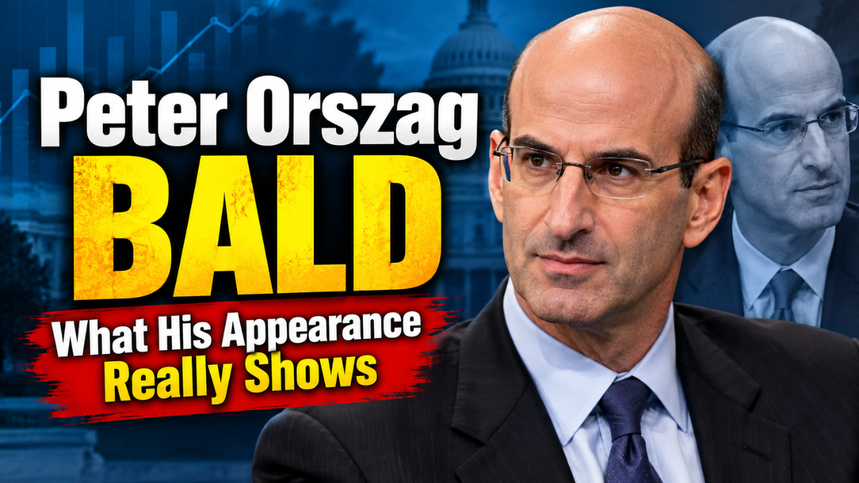
A quick search for “Peter Orszag bald” brings up a simple question: does he shave his head, or is he naturally bald? In public photos, Orszag’s head looks bald or closely shaved. But a picture can show how someone looks without explaining why, and I couldn’t verify a reliable public statement from Orszag about his hair.
There’s more to know about the person behind the search, too. Orszag has moved from economic research and Washington policy roles to leading Lazard, the global financial advisory and asset management firm. His career explains why he appears so often in interviews and business news—and why people recognize his face.
Table of Contents
- Is Peter Orszag bald?
- What his public appearance can tell us
- Why people search for “Peter Orszag bald”
- The career behind the public profile
- From Washington to Lazard
- Why a familiar appearance attracts attention
- What we can responsibly say
- The short answer
Is Peter Orszag bald?
In current public photos, Peter Orszag appears bald or very closely shaved. That’s the straightforward visual answer. It’s different, though, from knowing whether he shaves his head, has naturally little hair, or simply prefers a particular grooming style.
Those details are personal, and they shouldn’t be filled in by guesswork. A photograph doesn’t reveal someone’s routine or the reason for their appearance. Nor does the official biography on Lazard’s website offer an explanation; it focuses on Orszag’s education, government service, and work at the firm.
So the most accurate wording is also the simplest: Orszag looks bald or closely shaved in public images, but the reason isn’t confirmed in the sources I checked.
What his public appearance can tell us
A headshot or television interview gives viewers a snapshot of someone’s appearance, not a complete account of their life. Lighting, camera angle, image quality, and the date of the photo can all affect what viewers notice. Even when the visual impression seems clear, it doesn’t reveal the choices or circumstances behind it.
That distinction matters with public figures. People often want a quick, definite answer, and search pages can make an assumption sound like a fact just by repeating it. But unless the person has discussed the subject or a credible source has reported it, it’s better to stay with what can actually be seen.
In Orszag’s case, the visible description is enough to answer the appearance question. There’s no need to attach a diagnosis, hair-loss timeline, or personal explanation to it. Those conclusions cannot be reliably drawn from a publicly available photo alone.
Why people search for “Peter Orszag bald”
Orszag is a regular presence in business and economic coverage. He has appeared in public roles where people watch him speak, hear his name, and see his face repeatedly: first in government, and now as a senior executive. When someone becomes familiar through news clips and interviews, viewers naturally notice details beyond their job title.
Imagine someone watching a short clip about a merger or the economy. They recognize Orszag from previous appearances, but can’t quite place him. A search for his name may then include the feature they remember. That doesn’t mean hair is a major part of his public story; it may simply be the detail that helps a viewer find the right person.
The wording of a search query can also make an ordinary curiosity look more significant than it is. It tells us what someone typed, not what Orszag has said about himself or what the public considers important about his career.
The career behind the public profile
Peter R. Orszag is an economist and business executive. According to his Lazard profile, he graduated summa cum laude from Princeton University before earning a Ph.D. in economics from the London School of Economics as a Marshall Scholar
Before his current role in finance, he served in government under two U.S. presidents. During the Clinton administration, he served on the Council of Economic Advisers and worked as a Special Assistant to the President for Economic Policy. Later, he became Director of the Congressional Budget Office, an agency that provides Congress with independent analysis of budget and economic questions.
According to the CBO, Orszag served as its director from January 18, 2007, until November 25, 2008. Its work includes giving Congress objective, impartial information to help lawmakers assess budget choices.
He later served in the Obama administration as Director of the Office of Management and Budget. That job put him at the center of federal budgeting, where policy goals have to be considered alongside costs, forecasts, and the limits of government resources. The archived White House biography also notes his earlier CBO leadership and work in the Council of Economic Advisers.
These roles made Orszag a recognizable face well before his career at Lazard. His public image grew through policy work, budget debates, and interviews—not through a story about his hair.
From Washington to Lazard
Orszag’s transition from public policy to the financial sector has kept him in the business spotlight. He joined Lazard in 2016 and later took charge of the firm’s Financial Advisory business. In October 2023, he became CEO, and by January 2025, his responsibilities had expanded to include the role of Chairman. Lazard currently lists him as its CEO and Chairman.
The shift makes sense when you look at the work involved. Government budget analysis asks what a policy may cost, how it could affect the economy, and what trade-offs lawmakers face. Financial advisory work asks companies and governments to make complex decisions about strategy, deals, and capital. The settings differ, but both require weighing evidence and consequences.
That doesn’t mean the two jobs are interchangeable. A government budget office serves Congress with analysis; an advisory firm works with clients on financial decisions. Still, Orszag’s experience in economics and policy gives context to why he moved between these worlds and why he continues to comment on business and economic issues.
It also explains why current photos and interviews are easy to find. A firm leader who speaks publicly about markets and strategy is more visible than someone working outside the public eye. That visibility can prompt searches about appearance, even when the more substantial story is his professional path.
Why a familiar appearance attracts attention
People often remember a public figure through a combination of voice, face, role, and setting. Someone might recognize a news anchor by their glasses, an athlete by a distinctive hairstyle, or an executive by the way they appear in interviews. These details can become search shortcuts.
That’s normal, but it’s useful to keep the shortcut in perspective. A person’s appearance may help identify them, yet it rarely tells us much about their abilities, views, or personal choices. For Orszag, the bald-looking or closely shaved appearance is a visible detail; his work across economics, government, and finance is what defines his public career.
There’s also a difference between curiosity and evidence. A search phrase can start a question, but it can’t answer it by itself. If an article turns speculation into certainty, the confident tone doesn’t make the claim more reliable.
What we can responsibly say
We can describe what public photos show: Peter Orszag appears bald or closely shaved. We can also say that official biographies describe a career spanning economic policy, government service, and financial leadership. Those are observable or documented points.
What we can’t responsibly claim from a photo alone is why he looks that way. Unless Orszag chooses to discuss his hair, or a credible source reports a verified explanation, guesses about grooming, hair loss, or health remain guesses. There’s no need to turn them into biography.
This approach may feel less dramatic than a headline promising “the real reason.” It’s more useful, though, because it leaves the reader with a clear answer and a fair picture of what is known. Personal appearance can be discussed without pretending it reveals private information.
The short answer
Peter Orszag appears bald or closely shaved in public photos, but I couldn’t verify a reliable public explanation for his hairstyle. His official biographies focus on his work: economics, senior U.S. government roles, and leadership at Lazard.
If you searched the phrase to identify him, that visual description answers the question. If you wanted to know why he looks that way, the honest answer is that the public sources I checked don’t say. The stronger story is his career—and how he moved from shaping budget policy in Washington to advising companies and governments in global finance.