
Your dog still rushes to the food bowl, but their breath has changed. Or your cat has started dropping pieces of food, then carrying on as though nothing happened. These small changes can leave you wondering whether to book a dental check or simply watch more closely.
That uncertainty helps explain the interest in Nerovet AI Smart Dentistry. Software that promises to help interpret dental images sounds useful, especially when pets can’t explain where something hurts.
But useful technology needs clear boundaries. Before trusting a scan or paying for access, it helps to understand what Nerovet describes, what dental images can reveal, and where a veterinarian’s examination remains essential.
Table of Contents
- What Nerovet Says It Offers
- A Tooth Photo Can Only Show So Much
- The Useful Part Is a Clearer Conversation
- Accuracy Claims Need More Context
- Where It Could Fit Into a Clinic Visit
- Check Pricing and Data Handling First
- Daily Care Still Does the Heavy Lifting
- Some Changes Deserve a Dental Appointment
- Deciding Whether Nerovet Is Useful
What Nerovet Says It Offers
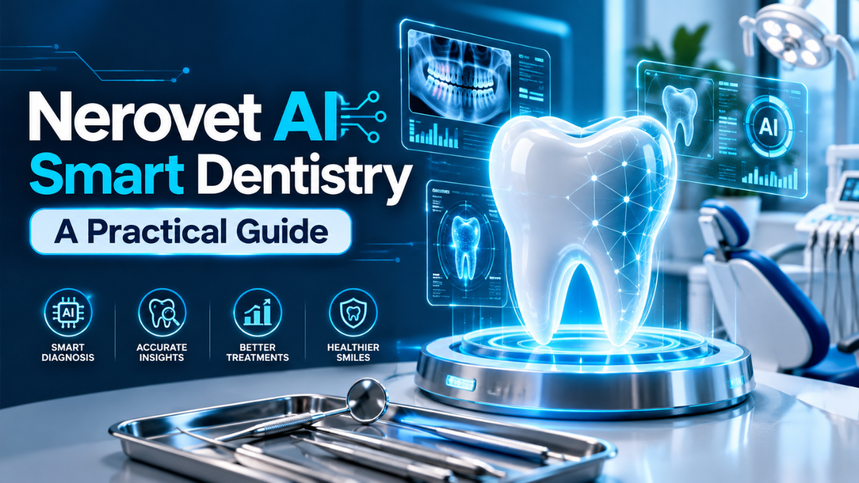
Nerovet’s website presents its service around pet dental imaging, particularly for dogs and cats. It describes software-assisted review of dental images and X-rays, with claims involving gum disease, tooth resorption, and other oral problems. Those are the site’s stated capabilities; they shouldn’t be treated as independently proven performance.
Its clinic page is more specific about the intended audience: veterinary practices, dental teams, and groups operating multiple clinics. The page promotes imaging review and reports that help explain findings to owners. Separately, its About page emphasizes education about pet oral health and dental technology.
Taken together, those descriptions suggest a focus on veterinary support and education. They don’t establish that every advertised feature is available in a finished consumer app. If you’re expecting to upload a phone photo and receive a complete dental assessment, ask for a demonstration of that exact service first.
A Tooth Photo Can Only Show So Much
A clear photograph can show visible tooth surfaces, deposits, and the appearance of nearby gums. It cannot show tooth roots or the supporting bone hidden beneath those gums. The American Veterinary Dental College stresses that dental radiographs can reveal disease missed during a visual examination.
That distinction matters when reading any description of a dental scanner. A photograph and a dental X-ray provide different information. Software can’t recover clinical detail that the original image never captured.
Imagine photographing a house from the street. You can inspect its exterior, but the picture won’t tell you whether a pipe behind the kitchen wall is leaking. Teeth have a similar visibility problem.
Veterinary dental guidelines describe a comprehensive assessment that combines examination, probing, charting, and dental radiographs under anesthesia. Image analysis may contribute to that assessment, but a reassuring photo result cannot rule out disease below the gumline.
The Useful Part Is a Clearer Conversation
One practical use worth evaluating is whether an imaging report makes a veterinary conversation easier to understand. Nerovet lists owner communication reports among its clinic use cases, although the quality and usefulness of those reports need to be demonstrated.
Picture a vet showing you an image with a particular area highlighted. Instead of leaving with a vague memory of “something near the back tooth,” you could ask what the highlighted area means and what further examination is needed.
A helpful report should make those questions easier. It should distinguish a suspected finding from a confirmed diagnosis and explain when an image is too unclear to assess.
I’d give more weight to that kind of explanation than to a colorful score alone. A number only becomes meaningful when it helps you decide what to do next for your pet’s specific needs.
Accuracy Claims Need More Context
Nerovet’s homepage displays a figure above 94% and also mentions accuracy rates of 92–98%. Those figures appear in promotional descriptions of dental scanning. The homepage doesn’t provide enough study detail to establish how well a particular Nerovet feature performs in everyday practice.
Here’s the thing: an accuracy percentage needs a defined task and a clear comparison.
As a hypothetical example, suppose 95 of 100 images show healthy teeth. A system that calls every image healthy would be 95% accurate while missing every diseased case. That isn’t a description of Nerovet’s results; it shows why a headline percentage can leave important questions unanswered.
Ask how often the system misses disease, how often it flags healthy teeth, and whether specialists checked the results. Evidence should identify the animals, image types, and conditions tested.
Results from selected, sharp images may also say little about a blurry photograph taken while a pet keeps turning away.
Where It Could Fit Into a Clinic Visit
A sensible proposed workflow would start with the veterinary team collecting appropriate images. Software could then flag areas for review, with the vet deciding whether those flags match the examination and other findings.
That’s a workflow to evaluate during a demo, rather than an assumption about Nerovet’s current implementation.
For a clinic, the practical questions are straightforward. Can staff use their existing imaging equipment? Can they correct a mistaken flag? Does the report fit into the patient record without repeated copying? How much time does reviewing the output actually take?
Ask to see ordinary cases alongside difficult ones. Include images the system cannot interpret confidently.
For an owner, the important question is simpler: “How does this result affect my pet’s care?” The explanation should connect the image to the vet’s reasoning, including any uncertainty.
Check Pricing and Data Handling First
Don’t build a budget around prices repeated in older online reviews. Nerovet’s homepage pricing link currently leads to its clinic demonstration page rather than a public plan table. Request a current quote and clarify whether charges apply per clinic, user, image, or report.
Ask about setup costs, cancellation, support, and access to previous reports after a subscription ends. A low monthly fee tells you little if essential features cost extra.
Data handling needs a similarly direct conversation. Nerovet’s published privacy policy discusses contact forms, demo inquiries, and website analytics. It doesn’t set out detailed arrangements for clinical image storage, retention, or use in model training. Those details need clarification before patient records are uploaded.
Keep a copy of the answers. Written terms are easier to rely on than a reassuring sentence during a sales call.
Daily Care Still Does the Heavy Lifting
Whatever happens on a screen, pets still need practical dental care. The American Animal Hospital Association recommends regular veterinary dental examinations and daily toothbrushing using toothpaste made for pets. Human toothpaste can contain ingredients that are unsafe for animals.
Let’s be honest, “brush every day” sounds easier than it feels when a cat disappears at the sight of a toothbrush. Ask your veterinary team to demonstrate a gradual approach suited to your animal.
If brushing is difficult, discuss appropriate alternatives or additions. Dental diets and suitable products may help, but the choice should reflect your pet’s needs. AAHA advises looking for products carrying the Veterinary Oral Health Council seal.
A useful digital service could support that routine with understandable records or reminders. Judge those conveniences by whether they help you follow the care plan. Collecting more reports has little value if nothing changes between appointments.
Some Changes Deserve a Dental Appointment
Persistent bad breath, drooling, bleeding, loose teeth, facial swelling, and changes in chewing deserve veterinary attention. Reduced appetite, dropping food, or refusing meals are also reasons to have the mouth checked. The American Veterinary Medical Association advises earlier examination when these signs appear.
Don’t let a reassuring software result override what you’re seeing at home. Equally, an alarming flag needs professional interpretation before you draw conclusions about treatment.
Be careful when trying to photograph a sore mouth. Painful animals may bite, and the AVMA specifically warns owners to take care during mouth checks. You don’t need the perfect photograph before calling your clinic.
Deciding Whether Nerovet Is Useful
Nerovet AI Smart Dentistry deserves to be judged through a clear demonstration, relevant evidence, understandable reports, and transparent terms. Those are reasonable expectations for something intended to support health decisions.
For clinics, a small evaluation could establish whether it improves image review or owner communication. For pet owners, the most useful starting point is a conversation with the veterinary team already responsible for their animal’s care.
Technology earns its place when it helps someone understand a problem and act appropriately. If Nerovet can do that reliably within its stated limits, it may offer practical value. Your pet’s comfort, the quality of the examination, and a clear care plan remain the things that matter.