

The rain stopped two hours ago, and the basement floor is only now getting wet. You dry the corner, carry a basket of laundry upstairs, and come back to a fresh line of water where the wall meets the concrete. That timing is worth remembering.
A drain tile drain collects water in the soil near or beneath your foundation and gives it a route away from the house. It’s worth looking into when water keeps seeping in at floor level. Before you price out a trench, though, take a look at how water moves around the house. The first clue might be visible from the driveway.
Table of Contents
- What a Drain Tile Drain Does
- Read the Water Marks Before You Dig
- Start With the Water You Can See
- Where the Pipe Goes Changes the Job
- Follow the Water All the Way Out
- When an Existing Drain Stops Working
- What to Ask Before You Pay for a New Drain
What a Drain Tile Drain Does
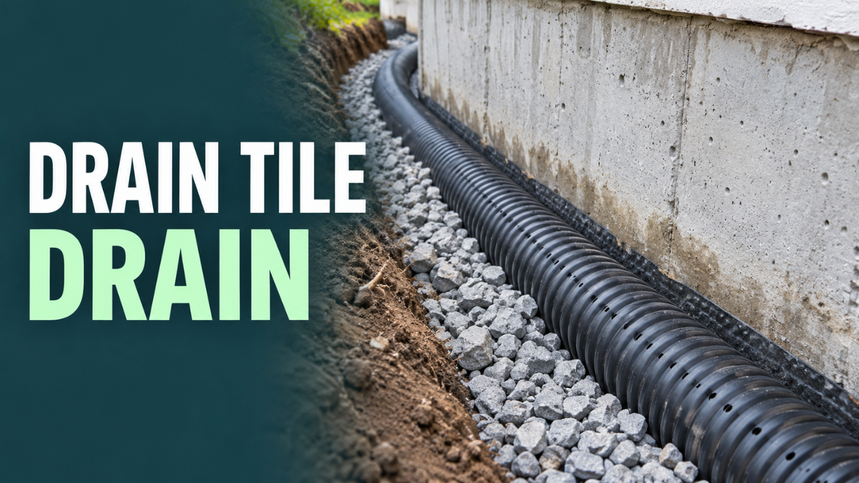
The word tile comes from the short lengths of clay pipe once used for underground drainage. A modern footing drain usually uses plastic pipe with holes or slots. It sits low beside the footing, the wide concrete base that supports the foundation wall.
After several days of steady rain, water can build up in the soil and press against the basement wall or up beneath the floor. It may find a way in through a crack in the concrete or the seam where the floor meets the wall. A drain near the footing helps ease that pressure by giving the water a low place to go.
Water moves through the washed stone around the drain and enters through the slots in the pipe. Filter fabric helps keep fine soil from filling the gaps between the stones.
People sometimes call this a French drain. The terms overlap because both can use a gravel trench and a perforated pipe. Location tells you what job the drain is meant to do. A shallow trench across a sloping yard may catch water moving through the upper layers of soil. A footing drain collects it down at the base of the house.
Read the Water Marks Before You Dig
Start where the wall first gets wet. If you see a streak below a basement window, look into the window well. Leaves can collect there, and a well that fills up during a storm can let water in around the window. If the floor gets wet below the laundry hookups on a dry day, check the washer and its connections. A sloping floor can carry water several feet from where it started.
Sometimes the clue is a thin film of moisture. If cold pipes and several wall surfaces feel damp on a muggy day, you may be dealing with condensation. Water that repeatedly seeps through the joint between the floor and wall after long rains, especially along more than one wall, is reason to investigate the drainage below ground.
Take a quick photo before you mop up. Make a note of where the water first appeared and how long it had been raining. The next time it happens, you can see whether the same corner gets wet first or whether the damp area spreads as the ground gets wetter.
Start With the Water You Can See
Look up at the gutters, then down at the ground. A gutter that spills over at one end can soak the same patch of soil through an entire storm. A downspout that empties by the wall can do the same thing. Follow the water downhill from wherever the downspout ends. Even a long extension can send runoff back toward the house if the ground pitches the wrong way.
Say the flower bed below your kitchen window has sunk a little. The edging still looks straight, but the soil behind it now holds a puddle against the house. There’s a surface drainage problem you can see. Get the gutters flowing, give roof runoff a path away from the foundation, and correct low spots that funnel water toward the wall. Then check the basement again after the next substantial rain.
Where the Pipe Goes Changes the Job
An exterior drain collects water as it moves through the soil toward the base of the foundation. On a new build, the crew can lay the pipe while the foundation is still exposed. On an existing house, getting down to the footing may mean taking out a walkway or pulling back landscaping. The open trench also gives the crew access to repair or waterproof the outside face of the wall.
An interior installation usually starts with a strip of concrete cut along the basement perimeter. The pipe goes beneath the slab, where it can collect water from below the floor and route it to a sump basin. The crew patches the concrete once the pipe is in place. If the basement is finished, ask how much flooring and wall finish will need to come out to make room for the work.
Here’s where the type of wall matters. Concrete block walls can hold water in their hollow cores. If that’s happening in your basement, an interior system designed for those walls may need a way to release that water into the drain. Ask how the installer plans to handle it before the wall finishes go back up.
Follow the Water All the Way Out
An outlet that opens to the air on lower ground is called a daylight outlet. If your property has enough slope and a suitable place for the water to go, gravity can handle the trip. In a sump system, water collects in a basin and the pump lifts it out through a discharge line. Some locations allow a connection to a storm drain, so check local rules if that’s the proposed outlet.
Inside the basin, a float tells the pump when the water has risen high enough for it to start. When the pump shuts off, a check valve keeps water left in the discharge pipe from falling back into the basin. If you hear water spill back into the pit after each cycle, mention it when you have the pump checked.
Picture a pump sending water into the same dip beside the house after every storm. The water soaks in, reaches the drain again, and the pump gets another turn with it. If your system empties outside, take a look while it’s draining. The end of the pipe might be well clear of the wall, but the slope of the ground still decides where the water goes next.
When an Existing Drain Stops Working
Start with the parts you can see. If the pump runs and very little water comes out of the visible outlet, check for leaves at the opening or ice in exposed sections during freezing weather. Follow the manufacturer’s directions when you test the pump. If storms often knock out your power, ask about a battery backup when you have the pump serviced.
The buried pipe has its own failure points. Fine sediment can build up, roots can get in, and a section of pipe can collapse. If you have a cleanout, a capped opening that gives access to the pipe, a drainage contractor may be able to inspect the line before recommending a repair. Tell them if the pump passed its test and the same corner still gets wet.
If you’ve just moved in, an old invoice or a photo from a previous repair may help you find the route of the existing drain. The sump pump is easy to spot. The pipe feeding it could serve a single wall or circle the whole basement. That detail matters when the water shows up on the far side of the room.
What to Ask Before You Pay for a New Drain
Ask for a sketch that shows where the pipe will run, what it will collect, and where it will empty. If the proposal covers one wall, ask what led the contractor to stop there. Find out who handles the concrete, flooring, or garden restoration. I’d want that spelled out while comparing quotes, especially if one involves a patio you plan to keep.
Before the crew covers the trench, get a photo of the pipe route and any cleanouts. Once the work is done, have the installer show you how to check that water is reaching the outlet or that the pump is cycling normally. When the next long storm rolls through, you’ll know where to look while the system has water to move.